










































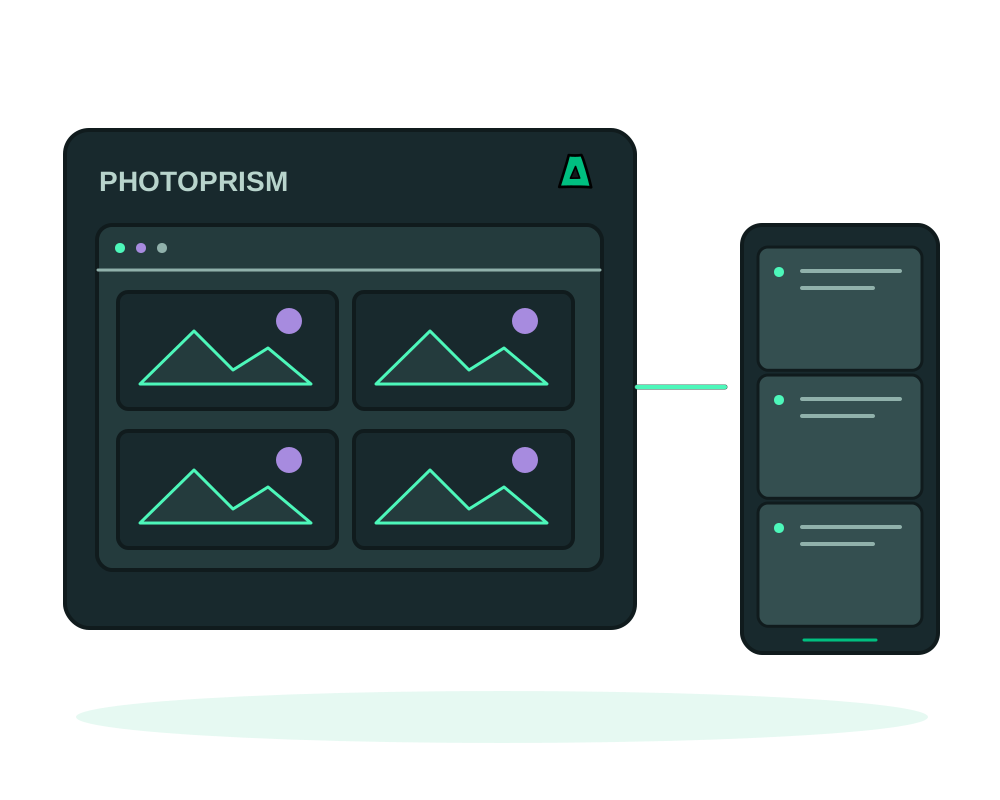
Keep a searchable photo library on your own offshore server with PhotoPrism. You choose the storage, access and enabled integrations. Review external services and AI configuration separately before sending photos or metadata beyond the deployment.
What you get
- Automatic classification so the library is searchable without manual tagging
- Face recognition, geo-search and a timeline, computed on your machine
- Storage and integration choices under your control, with external services reviewed before use
- Offshore, no KYC, crypto billing
Get it running
Give it room to work
This is one of the heavier catalog apps: around 2 GB of memory and generous disk, since indexing and thumbnails add to the size of the originals. Pick an offshore VPS with headroom.
Install it in one click
Install PhotoPrism from the catalog with a hostname such as photos.example.com. It requires an admin password of at least eight characters and will not start without one, so there is no window where the instance sits unclaimed.
Import your photos
Place your originals on the server and let it index. The first pass takes a while, since it is doing the classification work locally that a cloud service would do on its own fleet.
Browse and search
Search by face, place, date or content, and share albums selectively rather than by default.
Most phone photos embed GPS coordinates and timestamps in their metadata. That is useful inside your private library and dangerous outside it: publishing a single image can reveal where you live. Strip metadata from anything you share publicly, and never assume a shared album has been scrubbed for you.
A face-recognition index of your family and friends is sensitive personal data, and they did not choose to be in it. Keep the instance private, restrict who can log in, and think twice before enabling public sharing on a library full of identifiable people.
Keep independent backups of the originals, index database and relevant storage/configuration. Thumbnails and a working web interface do not prove that the original photos are recoverable. Test opening original files from a restored copy.
The classification runs on your CPU, so the initial import is slow on a small server. It is a one-off cost for the bulk of the library, with incremental work after that.
Protect originals before reindexing or moving
For a supported Agent-managed deployment, use app inspection and maintenance to check status, logs and available resources. Reserve space for originals, indexing work and recovery; do not assume a native PhotoPrism command is exposed by the platform just because it exists upstream.
Review app backups to Impreza S3 against the actual locations of originals, the index database and storage files. Bind-mounted photo collections and external storage are not automatically covered. Use a consistent database backup alongside the file recovery plan.
Before migration between compatible servers, verify the original files and configuration on the destination, test search and album access, and review sharing settings before switching traffic. Keep an independent copy of irreplaceable originals.
Start now
Spin up an offshore VPS and install PhotoPrism from the catalog, or read the documentation.