




































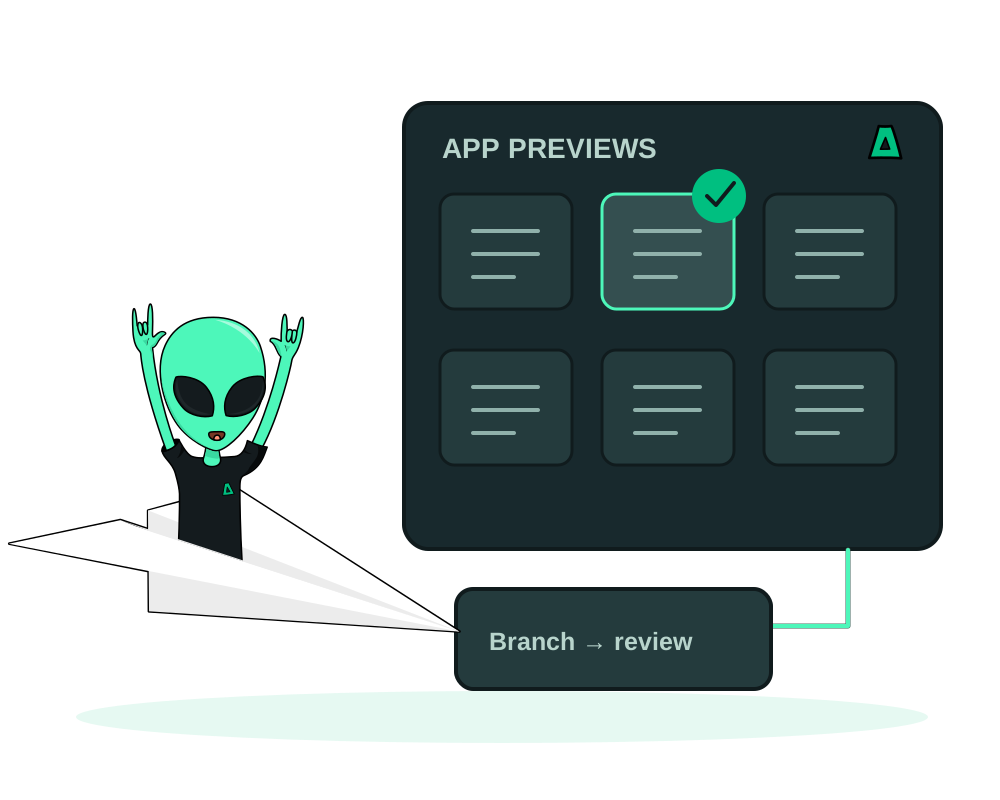
Review a proposed app change before moving it into your main deployment. Impreza branch previews create a separate deployment with a temporary onion address, using your server’s resources and a configurable lifetime.
The generated preview address does not need a public DNS hostname or a public TLS certificate. This is useful when you want to share a review over Tor without adding a public preview hostname. Application authentication and careful handling of data remain part of the setup.
A review workflow with a defined lifetime
Enable previews on an eligible Git-connected parent, push another branch and collect its onion address. Reviewers open it with Tor Browser. Later pushes refresh the live preview and extend its expiry.
Choose a lifetime from 1 to 168 hours and a count limit from 1 to 20 previews per parent. Defaults are 24 hours and five previews. When a new preview reaches the configured limit, the oldest existing preview is selected for retirement. Expired previews are handled by cleanup, and branch-deletion pushes can request earlier retirement. Supported GitHub pull-request and GitLab merge-request events also cover opening, new commits, closing or merging, and reopening with Agent 0.6.28 or later. Read the resulting lifecycle state; closing a review is not proof that cleanup finished.
Use this for short-lived app reviews and tests whose dependencies can work in that environment. A permanent staging service or production Tor site needs its own deployment plan.
What runs on your server
Each preview consumes server capacity alongside the parent and any other apps. Account for build overhead, CPU, memory and storage when choosing the VPS. The count limit does not reserve capacity or automatically scale the server.
Supported declared volumes get separate preview storage. The feature does not copy a full production environment or automatically clone external databases. New previews inherit no app variables by default: explicitly select only safe names in the parent’s Preview settings. Existing previews retain their configuration and need a separate review. Use non-production services and credentials for tests.
Automatic previews do not inherit build credentials. A private source repository and private package dependencies are separate requirements; confirm the project can build without inherited package secrets.
Confirm that your project fits
Use an eligible Git-connected custom deployment with the authenticated webhook events configured for your workflow. A working push connection alone does not enable every PR/MR event. New previews preserve the parent’s Dockerfile path, and supported private previews use the parent’s current Git credential when cloning. Keep the parent, account, agent, repository and authentication method consistent. Recreate older previews when moving them to the linked parent connection. Compose manifest deployments are excluded.
Source-repository privacy, variable isolation and visitor access are separate properties. Check each one before treating a preview as suitable for private review.
Your app should work with its onion origin and reviewers should be comfortable using Tor Browser. Public-only OAuth callbacks, external webhooks and third-party assets may need a separate testing approach. Keep production payments, customer notifications and production database access out of the review environment.
Native Tor integration for application reviews
Impreza brings infrastructure and application operations together through the portal, REST API and MCP. Branch previews use that platform to publish a temporary onion deployment from an eligible Git push. Use a compatible AI assistant to inspect preview settings and results, while keeping the lifetime and server capacity under your control.
For persistent apps, the platform also supports Tor client access controls, protection profiles and identity management on eligible agent-managed deployments. A new preview does not automatically inherit those policies: follow the onion service documentation and verify the actual app.
Restrict a branch preview to selected Tor clients
An onion address alone does not limit access. When a review should be limited to specific people, explicitly create the preview with Tor client authorization and add the intended reviewer clients before sharing it. Automatic previews created from Git pushes remain reachable by Tor users, so use the restricted setup for reviewer-only access. Store the generated reviewer key safely; it is shown only once.
Privacy without an absolute promise
An onion review address avoids provisioning a public hostname for that preview. It does not automatically restrict visitors to your team, remove account records or make the application untraceable. Protect the app with appropriate login, review server exposure and share the address through the channels you intend to use.
The detailed guide explains inherited settings, branch handling and cleanup so you can assess the workflow before enabling it. No unlimited-preview allowance, dedicated capacity or zero-impact guarantee is implied.
Start with one test branch
Choose capacity for the parent and a small number of previews, deploy a test parent with suitable settings, then follow Preview Git Branches over Tor. Verify the resulting app and retirement behavior before using the workflow for client reviews.
If your goal is a persistent onion service, explore Tor Hosting. For app deployment through an assistant, start with Deploy with AI.